What is gynaecomastia?
Gynaecomastia is enlargement of the breast tissue in men. It is the most common male breast condition and is usually caused by a shift in the balance between oestrogen and testosterone. It often appears during puberty or after the age of 50, and it can affect one or both sides.
Doctors distinguish two types. True gynaecomastia means that the gland tissue behind the nipple has grown, which feels firm or rubbery. Pseudogynaecomastia is caused by fat alone, usually with weight gain. Many men have a mixture of both. Whatever the cause, a full or puffy chest can make men self-conscious about wearing fitted clothes or taking their shirt off.
Who is gynaecomastia surgery suitable for?
Surgery may be right for you if:
- Your chest enlargement has lasted for a long time and has not settled
- Medical causes and medicines have been checked and treated where possible
- You are 18 or older (younger patients only in selected cases, with parental consent and specialist advice)
- Your BMI is preferably below 30 and your weight is stable
- You are healthy enough for a general anaesthetic
If you use anabolic steroids or cannabis, you should stop well before surgery, as they can cause the problem to return.
Surgical techniques
Liposuction
When the fullness is mainly fat, the surgeon removes it through a few small incisions using a thin cannula. This is the least invasive option.
Gland excision
Firm gland tissue cannot be suctioned out, so it is cut away through a small incision along the lower edge of the areola. Most men need a combination of excision and liposuction.
Skin reduction
After major weight loss or with very large breasts, loose skin may need to be removed, and the nipple may be repositioned or reduced. This leaves longer scars and is reserved for advanced cases.
How the operation is done
Assessment and marking
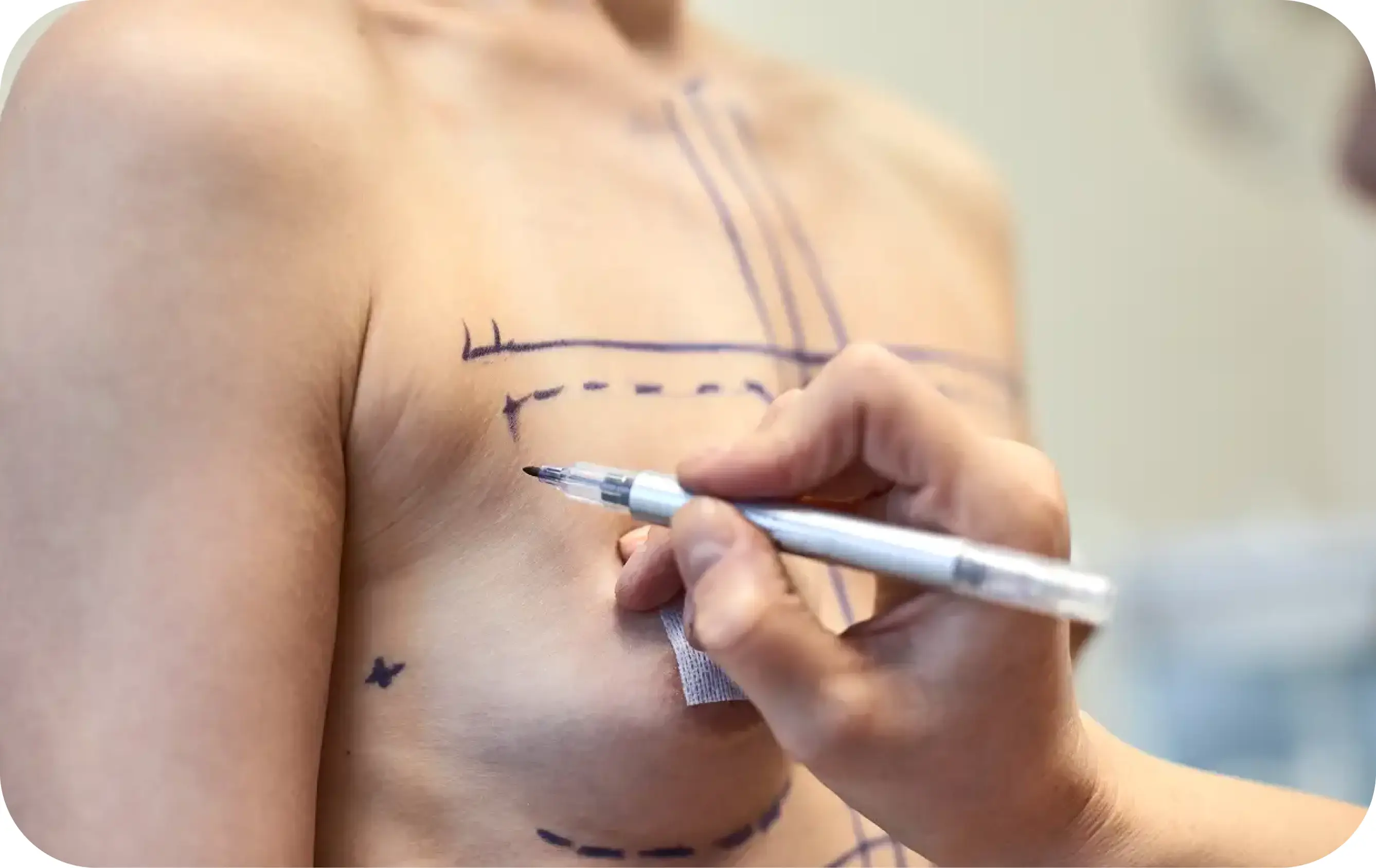
The day before surgery you have blood tests and an ECG. The surgeon examines your chest, may arrange an ultrasound and marks the areas to be treated while you stand.
Anaesthesia
The operation is done under general anaesthesia, so you are asleep throughout.
Removing fat and gland tissue
Liposuction shapes the chest and smooths the edges, then the gland is removed through the areolar incision. Excess skin is trimmed if needed.
Closing and dressing
The incisions are closed with fine stitches and you are put into a compression vest. Small drains may be used for a day or two. Liposuction alone takes about an hour, while combined surgery takes 2 to 3 hours.
Recovery timeline
- Days 1–2
Your chest feels sore, tight and swollen. You stay in hospital for 4 nights and drains, if used, are usually removed within 48 hours.
- Week 1
Bruising and swelling start to settle. Most men return to office work after 5 to 7 days.
- Weeks 2–6
You keep wearing the compression vest and gradually increase activity. Avoid heavy lifting, chest exercises and contact sports until about week six.
- Months 3–6
The last swelling resolves and the chest shape becomes final. The areola often looks slightly smaller once the tissue beneath it has gone.
Aftercare
- Wear the compression vest as instructed, usually for 4 to 6 weeks
- Sleep on your back and avoid lying face down
- Take prescribed medicines and avoid aspirin and ibuprofen unless your surgeon allows them
- Keep the incisions clean and dry until they have sealed
- Eat a balanced, protein-rich diet to support healing
- Avoid smoking and alcohol while you recover
Risks and side effects
Every operation carries some risk. With gynaecomastia surgery these include:
- Seroma, a collection of fluid under the skin
- Bleeding or haematoma
- Infection
- Blood clots
- Poor wound healing or noticeable scarring
- Changes in nipple or skin sensation
- Contour irregularities or a slight difference between sides
- Reactions to the anaesthetic
Scars fade over time but never vanish completely. Wearing the vest and following aftercare instructions lowers the risk of problems.
Results
Many men find they feel more confident in fitted shirts, at the gym and on the beach.
Most men see a flatter chest straight away, with the final contour visible after a few months. Because the gland tissue has been removed, the result is long-lasting as long as your weight stays stable and you avoid things that trigger the condition.
Gynaecomastia surgery in Turkey: your trip
Before you fly
You send photos of your chest and your medical history, including any medicines or supplements you take. The surgeon reviews them and you receive a treatment plan. Stop smoking, alcohol and blood-thinning medicines about two weeks before surgery.
In Istanbul
Arrive the day before surgery for tests. VIP transfers, a translator, the hospital stay, medication and meals are included, and a companion can stay with you at no extra cost.
Back home
Your coordinator is available 24/7 on WhatsApp, checks on your healing and passes any questions to your surgeon.
What the Gynecomastia package includes
- VIP transfers from and to Istanbul Airport (IST)
- Fully equipped room in the hospital
- Translation services at the hospital and during follow-up
- Pre-operative testing
- Consultation with your doctors
- Post-operative care and follow-ups for a year
- General anaesthesia
- Special compression garments
- One companion included in the price
- Three meals a day for you and your companion
- Full hospital stay for 4 nights, 5 days
- Aftercare package with a full set of medications to take home
Gynecomastia FAQ
What causes gynaecomastia?
It is usually linked to an imbalance between oestrogen and testosterone. It is common during puberty and in older men, and can also be caused by some medicines, anabolic steroids, cannabis, weight gain or certain medical conditions. A doctor should rule out an underlying cause before surgery.
Will it go away on its own?
Gynaecomastia in teenagers often settles within a year or two. If enlargement has lasted a long time, the gland tissue tends to become firmer and is unlikely to shrink without surgery.
Can exercise get rid of it?
Exercise and weight loss reduce fat, so they can help with pseudogynaecomastia. True gland tissue does not respond to diet or training, which is why surgery is needed to remove it.
Will I have visible scars?
Liposuction needs only a few tiny incisions. Gland removal is usually done through a small cut along the lower edge of the areola, where the colour change helps hide it. Larger reductions with skin removal leave longer scars.
How long do I wear the compression vest?
Usually for 4 to 6 weeks, day and night at first. It reduces swelling and helps the skin settle onto your new chest shape.
When can I go back to the gym?
Walking is encouraged from day one. Light cardio usually resumes after 2 to 3 weeks, and chest training and heavy lifting after about 6 weeks, once your surgeon agrees.
Can gynaecomastia come back?
Removed gland tissue does not grow back, but new enlargement can occur with weight gain, steroid use or some medicines. Keeping a stable weight helps maintain the result.