
-

-
 Istanbul / Turkey

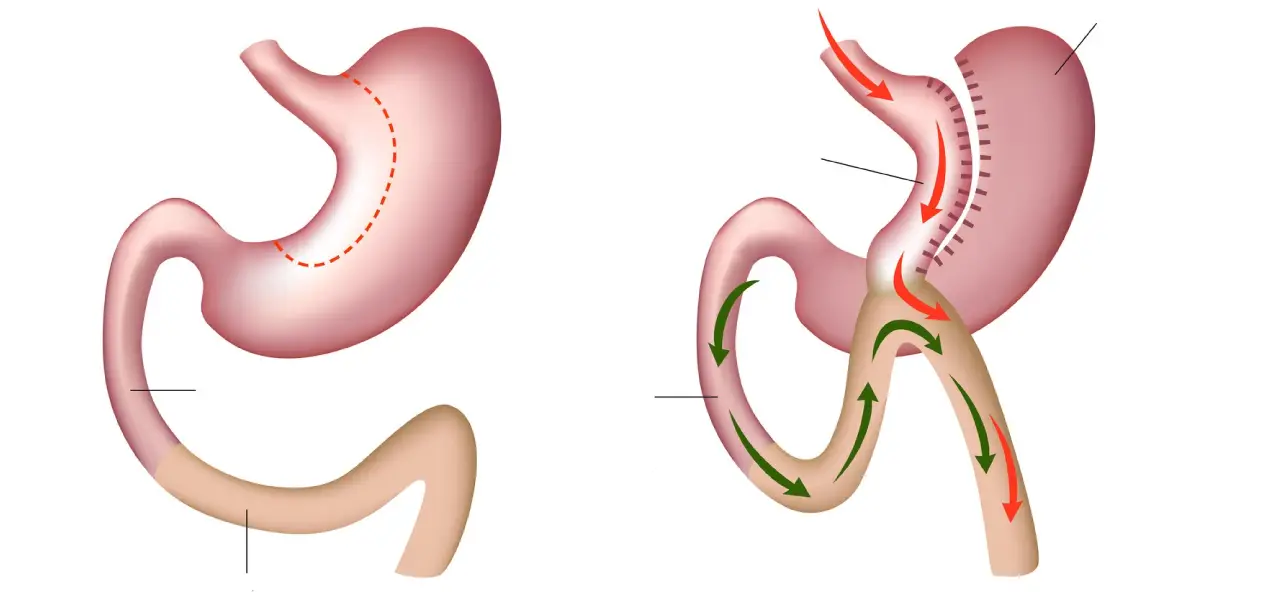
Mini Gastric Bypass Surgery, also known by One Anastomosis Gastric Bypass or by MGB, is a common Bariatric Surgery. Mini Gastric Bypass, like other Bariatric Surgeries, aims to trigger weight loss through modifications to the digestive system that restrict the absorption of the nutrients. The stomach is made into a small tube, and the effective bowels are shortened.
After Mini Gastric Bypass Surgery, consumed food will go through the new tube shaped stomach and then go into the newly attached part of the small intestine, bypassing 6.6 to 8 feet (200 - 250 cm) of the small intestine.
Mini Gastric Bypass is done Laporoscipally, which shortens the recovery period and prevents permanent surgery scars.
Mini Gastric Bypass is named after the Roux En Y Gastric Bypass, but has only a single anastomosis instead and combines properties of the Gastric Sleeve and Gastric Bypass. Mini Gastric Bypass is frequently preferred over Gastric Bypass due to its successful results and being the shorter, as well as, cheaper method.
Mini Gastric Bypass is used as a primary weight loss procedure, and used to treat obesity and obesity-related medical conditions. Mini Gastric Bypass is also the preferred revisional surgery for patients who were unsuccessful with Gastric Band or Gastric Sleeve.
Mini Gastric Bypass alleviates gastroesophageal reflux, heart diseases, high blood pressure, high cholesterol, sleep apnea, and type 2 diabetes, but is not the suitable option for patients who have acid reflux as Mini Gastric Bypass will exacerbate it.
Surgical methods, like Mini Gastric Bypass, are often recommended if the patient is morbidly obese to such a degree that even dieting and exercises are not enough to help the patient lose weight.
Mini Gastric Bypass, like Gastric Sleeve, is performed laparoscopically, i.e. using small keyholes instead of opening up the abdomen.
The final decision on if a patient qualifies for Mini Gastric Bypass or if Mini Gastric Bypass is recommended is made by our Bariatric Team, here are some of the qualifying criteria that our Bariatric Team uses for Mini Gastric Bypass:
A Body Mass Index, BMI, of at least 35 is required, or having an obesity related condition with a BMI of 30.
Must not have tested positive for Covid within the month before surgery.
Must not have an active infection at the time of the surgery.
Must not have Acid Reflux caused by a hiatal hernia.
Chronic diseases, such as type 2 diabetes, hypertension disease etc, might require additional testing before arriving in Turkey.
Patients should stop smoking and alcohol at least 6 months before surgery.
After a patient qualifies for the Mini Gastric Bypass, their Patient Coordinator, along with a treatment schedule, will provide the patient with a Liver Fat Reducing Diet that should be followed before arriving at the hospital. The patient should not consume any food or liquid 12 hours before the surgery in order to make sure the stomach is empty before surgery. The following dietary and medicinal restrictions have to be followed before the surgery as well:
Usage of vitamin K should be stopped 30 days before surgery as it is an anticoagulant, i.e. blood thinner, and increases the rate of complications associated with internal bleeding.
Oral contraceptives and any other contraceptives that have estrogen or progesterone, like coils, HRT patches, or birth control implants, must be stopped or taken off 30 days before the surgery as they increase the rate of complications arising from blood clots. Hormonal and oral contraceptives can be used 30 days after surgery. Non-hormonal implants are safe and recommended if considering a mini gastric bypass.
Smoking should be avoided starting a week before surgery until three weeks after surgery. Smoking causes the veins to constrict and limits blood circulation, potentially causing complications such as leakage.
Alcohol consumption should preferably be avoided in the last 3 months leading up to the surgery. Alcohol consumption a week before surgery should especially be avoided as it will increase the burden on the liver and might cause complications with anesthesia.
The patient will have a consultation with an internal diseases specialist, radiologist, anesthesiologist, and a general surgeon before the surgery.
Preoperative tests at the hospital will include full abdominal ultrasound, chest x-ray, breath functioning test, electrocardiogram, endoscopic investigation of the stomach, and full blood test as pre operation test and exams.
The surgery takes about 60 to 90 minutes to complete. Like the Gastric Bypass, the Mini Gastric Bypass surgery is also a two - part procedure that separates approximately 25% of the stomach from the rest of the stomach. A pouch is created from the smaller part of the stomach, and is then joined to the small intestine with an anastomosis. After surgery, the majority of the stomach and approximately 6.6 - 8 feet (200 to 250 cm) of the small intestine are bypassed which means they are no longer involved in the digestion or absorption of the food eaten.
The surgery is performed under general anesthesia. The surgeon makes 4 - 6 keyhole cuts on certain points of the patient's abdomen. A camera and surgical instruments are inserted through these keyholes. The camera is connected to a video monitor in the surgery room that allows the surgeon to view the inside of the abdomen for the operation.
The stomach is divided with a laparoscopic stapler and a smaller tube shaped stomach is formed. Remainder of the stomach is no longer attached to the esophagus and will no longer help with the digestion of the food. The surgeon will then bypass 6.6 to 8 feet of the intestines and the remainder is then attached to the new stomach. As a result, the food that passes from the small stomach into the small intestines is met with the digestive juices that have been produced in the remaining bigger stomach.
Mini Gastric Bypass postoperative prescriptions given to the patients will include blood thinner injections and stomach protectors. The medicine provided will include antibiotics and painkillers that should be used if needed. A Booking Surgery dietician will provide a diet list for each patient and will provide additional support if needed. The initial dietary restrictions post surgery will be as follows:
The patients will only consume liquids for the first 3 weeks following surgery. Also called the liquid stage, patients are advised to consume protein shakes, soups, herbal tea, etc.
The patients are advised to consume puree and liquid foods for the following 3 weeks. Also called the puree stage, patients are recommended to increase their diet by eating mash and blended foods.
After 6 weeks of liquid and puree stage, the patients can start consuming solid foods. After Mini Gastric Bypass surgery, patients should never eat solid and liquid foods at the same time.
Additionally, patients should avoid caffeinated or carbonated drinks for 3 months following surgery, but decaffeinated coffee can be safely consumed 10 days after surgery.
Patients should also avoid smoking, alcohol, and any recreational drugs for at least 3 weeks following surgery.
Post surgery, some physical activities should be avoided as well:
Patients can go back to work 2 weeks after getting home if it's not a physically strenuous job.
Patients should avoid strenuous activity and sexual intercourse for the first month following surgery.
Patients should walk frequently and should not do any heavy lifting more than 5 KG for the first month following surgery and not more than 10 KG for the first 3 months after surgery.
Patients can start exercising to help the weight loss process 2 months after the surgery.
Additionally, the surgical stitches will dissolve on their own, but if they do not, patients should take an appointment from their GP to get them removed.
Mini Gastric Bypass Surgery, while being shorter than Gastric Bypass and being done Laporoscipally, has some risks associated with it like any major surgery. These risk include:
Increased risk of acid reflux
Increased risk of bile reflux
Bleeding
Infections
Intestinal Obstruction
Leakage
General anesthesia complications
Blood clots
Deep vein thrombosis
Blood thinners and compression socks provided after surgery lower the likelihood of blood clots and deep vein thrombosis.
These risks most likely show up within the first month after surgery.
The long-term complications of Mini Gastric Bypass Surgery can be explained as follows:
Stomach Ulcers
Incisional Hernia
Malnutrition
Gallstones
Dumping Syndrome
Malnutrition occurs when the body is deprived of vitamins, minerals and other nutrients needed to maintain healthy tissue and organ function.
The long term side effects of Gastric Bypass (Roux en Y) Surgery, as a result of malnutrition, include:
Vomiting
Pain
Fatigue
Dry Skin
Mood Changes
Hair Loss
Hernias
Gastroesophageal reflux
Hypoglycemia
During the rapid weight loss after Gastric Bypass surgery, approximately the first 6 months, gallstone formation increases by up to 20%.
Dumping syndrome:
Dumping syndrome is caused by the food and liquids in the stomach reaching the small intestine in a short time after Mini Gastric Bypass Surgery.
If Mini Gastric Bypass surgery is performed correctly by a certified surgeon, the patient will lose a significant portion of their excess body weight. In some cases, patients might experience severe acid reflux after mini gastric bypass which might require a revision into a Roux En Y Gastric Bypass. A revision from mini gastric bypass to roux en y gastric bypass might be considered.
The surgery is considered a failure if the patient regains the weight in a few years. Going back to old eating habits by forcibly overeating or frequently drinking carbonated drinks may cause the stomach to enlarge, therefore allowing weight regain.
Poor weight loss often leads to consideration of a revision surgery. In such a case, a revision from Mini Gastric Bypass to Gastric Bypass might be performed.
Mini Gastric Bypass has many advantages which can be listed as follows:
It is performed in a modified manner that involves less intestinal rerouting and a shorter overall procedure time.
Risk of internal hernia is lower than due to Roux en Y Gastric Bypass.
Mini Gastric Bypass is reversible as parts of the old stomach are not removed from the abdomen.
Alleviates obesity-related health problems such as type 2 diabetes, hypertension, sleep apnea, and acid reflux.
Within the first year after the surgery, patients lose 75% of their excess body weight, and 80% - 90% of their excess body weight within the first two years.
Less likely to gain back excess weight, unlike yo-yo dieting, the weight loss is usually for life.
Produces positive changes in intestinal hormones that reduce appetite and increase the feeling of fullness.
Decrease in excess weight alleviates the pressure on the knees and joints, increasing the recovery rate of osteoarthritis up to 85%.
It is performed in a modified manner that involves less intestinal rerouting and a shorter overall procedure time.
While Mini Gastric Bypass Surgery has many advantages, it does possess some disadvantages that have to be considered before going through with the surgery. Some of the disadvantages include:
Compared to other stomach reduction operations, the possibility of complications is higher since the operation involves a wider portion of the digestive system.
Although it is rare, as Mini Gastric Bypass reduces absorption, vitamin deficiency may occur.
Bariatric vitamin supplements have to be taken permanently after the operation.
Endoscopy becomes harder to perform on the patient after the Mini Gastric Bypass surgery, but is still possible.
There are chances of bile reflux gastritis. This is considering that mini-gastric bypass surgery does not divert the bile and digestive enzymes from the stomach. Therefore, there are chances of a condition that can be hard to treat.
Even though the Mini Gastric Bypass Surgery is less invasive, it still carries potential infection risks. Leakage or infection among staples connecting the stomach and intestines is also possible.
There is a possibility of complications similar to Roux-en-Y gastric surgery. The most common being surgical site hernias, ulcers, and other minor infections.
Has short and long term risks associated with it.

Bariatric & Metabolic Surgery, Gastroenterological Surgery

Bariatric & Metabolic Surgery, General Surgery