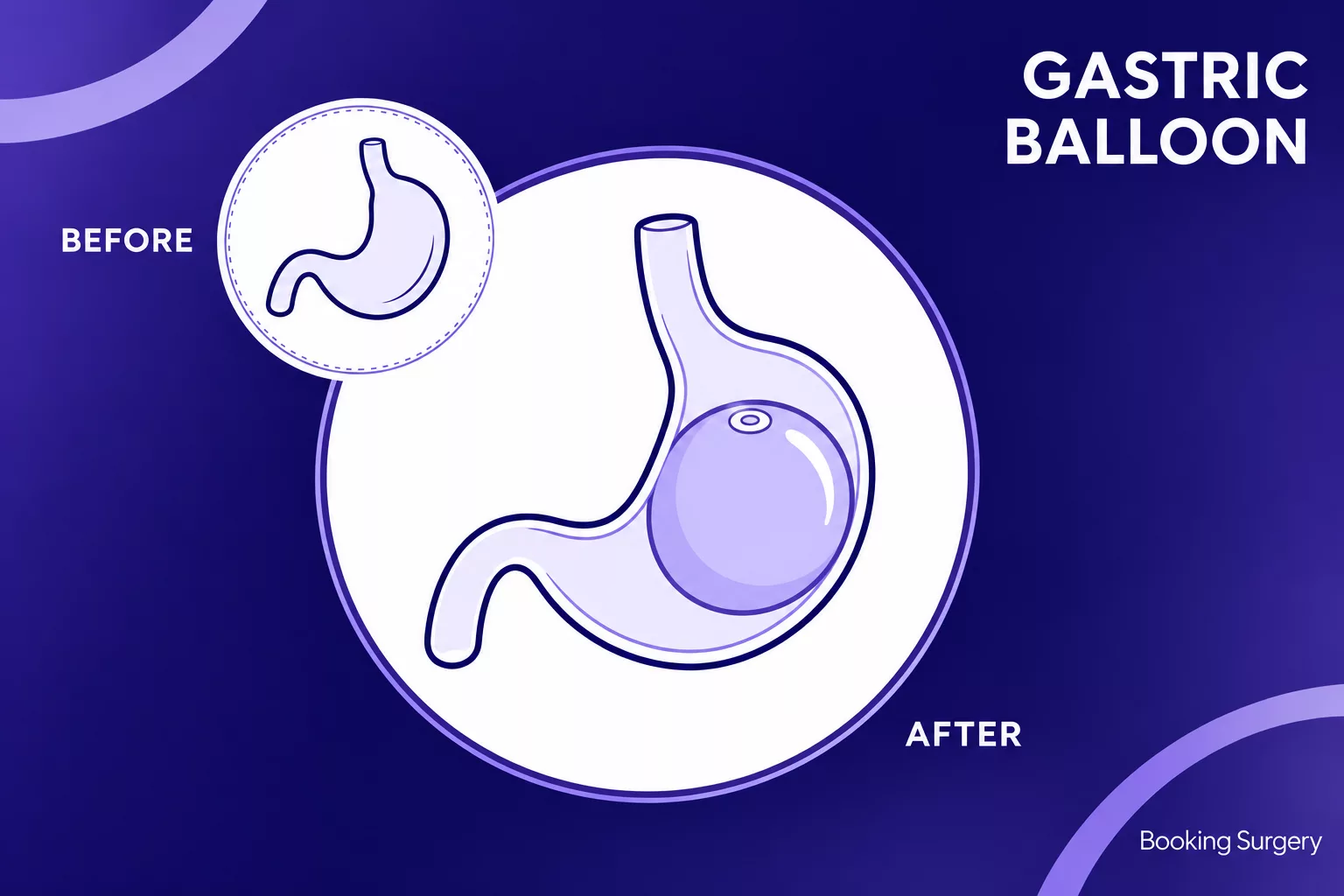
What is a gastric balloon?
A gastric balloon, also called an intragastric balloon, is a soft silicone balloon that sits inside your stomach for several months. Once in place, it is filled with sterile saline, usually around 400–700 ml depending on the type and your body. The balloon takes up part of the space in your stomach, so smaller meals leave you satisfied and the feeling of fullness lasts longer.
Unlike a gastric sleeve or bypass, nothing is cut or stapled. The balloon is placed through the mouth using an endoscope, or swallowed as a capsule, and it is always temporary. For this reason it is often chosen by people who want help losing weight without an operation, or who are not eligible for bariatric surgery.
Who is a gastric balloon suitable for?
A gastric balloon may be a good option if you:
have a BMI of around 28 or above
have tried diet and exercise without lasting success
would prefer to avoid surgery, or do not meet the criteria for it
need to lose weight before another operation, such as a joint replacement
are willing to follow a diet and activity plan while the balloon is in place
It may not be suitable if you have had stomach surgery before, have a large hiatus hernia, active stomach ulcers, inflammatory bowel disease, or are pregnant. Your medical history is reviewed before anything is booked.
Types of gastric balloon
6-month balloon
The most common type. It is placed and later removed by endoscopy and stays in the stomach for about six months.
12-month adjustable balloon
This balloon can stay in for up to a year. Its volume can be increased if you stop feeling full, or reduced if you have ongoing nausea or discomfort, in a short endoscopic adjustment.
Swallowable balloon
Here the deflated balloon comes inside a capsule that you swallow with water. A thin tube attached to it is used to fill it with saline, and an X-ray confirms its position. After around four months a valve opens, the balloon empties and passes out of the body naturally, so no endoscopy is needed.
How the procedure is done
Preparation
You follow a liquid diet for about three days before placement and fast for 12 hours beforehand. On arrival you have blood tests and an ECG, and you meet the doctor who will place the balloon.
Sedation and endoscopy
You are given sedation so that you are relaxed and comfortable. The doctor passes a thin camera through your mouth to examine your oesophagus and stomach and make sure it is safe to continue.
Placing and filling the balloon
The empty balloon is guided into the stomach and filled with saline through a fine tube. The saline often contains a harmless blue dye, so that a leak would show up as a change in the colour of your urine.
Monitoring
The procedure takes about 20–30 minutes. You stay one night in hospital so that early nausea can be treated and you settle in comfortably.
Recovery timeline
- Days 1–3
Nausea, vomiting, cramps and a bloated feeling are common as your stomach gets used to the balloon. You take anti-sickness medicine, an acid-reducing tablet and small sips of fluid.
- Days 4–7
Most symptoms ease. You move from clear liquids to thicker liquids and can usually return to light daily activities.
- Weeks 2–4
Puréed and then soft foods are introduced. You start to notice that small portions are enough.
- Months 1–12
You eat normal textures in smaller amounts. Weight loss tends to be steadiest in the first three months. Ongoing coaching on food and activity helps you build habits that last after removal.
Eating with a gastric balloon
eat slowly, chew well and stop as soon as you feel full
choose protein, vegetables and whole foods over sugary snacks
avoid fizzy drinks, which can increase bloating
drink plenty of water between meals
take your acid-reducing medicine for as long as the balloon is in place
build up regular exercise, such as daily walks
Risks and side effects
A gastric balloon is less invasive than surgery, but it is still a medical procedure. Possible problems include:
nausea, vomiting and cramps in the first days, which are expected
acid reflux or indigestion
intolerance that means the balloon has to come out early
deflation of the balloon, which can lead to it moving into the bowel
rarely, stomach ulcers, inflammation of the pancreas, overfilling of the balloon or a blockage
risks linked to sedation and endoscopy
Some people also find it hard, emotionally, to eat much less than before. Contact your coordinator straight away if you have severe pain, cannot keep fluids down or notice that your urine has turned blue or green.
Results
Results depend mainly on the habits you build during treatment. A balloon gives you a head start and helps you learn what a sensible portion feels like. People who keep eating well and stay active after it is removed have the best chance of keeping the weight off.
Gastric balloon in Turkey: your trip
Before you fly
You send your height, weight and medical history. The medical team reviews them, recommends the most suitable balloon and sends you a treatment plan. You start the liquid diet three days before your appointment.
In Istanbul
A driver meets you at the airport. A translator stays with you for tests and the procedure, and a companion can join you at no extra cost. Medication, meals and transfers are included, and you are usually ready to travel after 2 to 3 days.
Back home
Your coordinator is available 24/7 on WhatsApp, follows your progress through the diet stages and helps you plan the removal or adjustment when the time comes.
What the Gastric Balloon package includes
-
Hospital and medical care
Your private hospital room, nursing care, pre-operative tests, consultations with your surgeon, anaesthesia, the operation itself and the medication you take home.
-
VIP transfers
A private driver meets you at the airport and takes you between the airport, your hotel and the hospital.
-
Translator and companion
A medical translator at the hospital, and a companion can travel with you at no extra cost.
-
Meals and comfort
Daily meals for you and your companion throughout your stay.
-
24/7 patient coordinator
A dedicated coordinator answers your questions before, during and after your trip, in your language.
Your surgeons for Gastric Balloon


Gastric Balloon FAQ
How much weight can I lose with a gastric balloon?
Weight loss varies a lot from person to person. Many patients lose roughly 10–15% of their body weight while the balloon is in place, provided they follow the diet and activity plan. The balloon is a tool to help you build new habits rather than a permanent fix.
Who can have a gastric balloon?
It is usually offered to adults with a BMI of about 28 or more who have not managed to lose enough weight with diet and exercise alone. It can also suit people who do not qualify for, or do not want, bariatric surgery. Previous stomach surgery, a large hiatus hernia or active ulcers may rule it out.
Is the procedure painful?
Placement is done under sedation, so you should not feel it. Cramping, nausea and vomiting are common in the first few days as your stomach adjusts, and you are given medication to control them. Most people feel much better within a week.
How long does the balloon stay in?
It depends on the type. Standard balloons stay for about 6 months, longer-lasting and adjustable balloons for up to 12 months. A swallowable balloon empties itself after around 4 months and passes naturally.
How is the balloon removed?
Endoscopic balloons are removed in a short procedure under sedation: the saline is drained and the empty balloon is taken out through the mouth. You follow a liquid diet for a few days beforehand. A swallowable balloon does not need a removal procedure.
Can the balloon be removed early?
Yes. If you cannot tolerate it, the balloon can be deflated and removed earlier by a specialist. Your coordinator helps you arrange this if it becomes necessary.
Will I regain the weight after removal?
Some regain is possible, which is why the months with the balloon matter so much. Patients who keep the eating and exercise habits they learned usually hold on to more of their weight loss.
When can I fly home?
Plan for 2 days in Istanbul, including one night in hospital. Most patients fly home on day 2, once the early nausea is under control and you are drinking fluids comfortably.