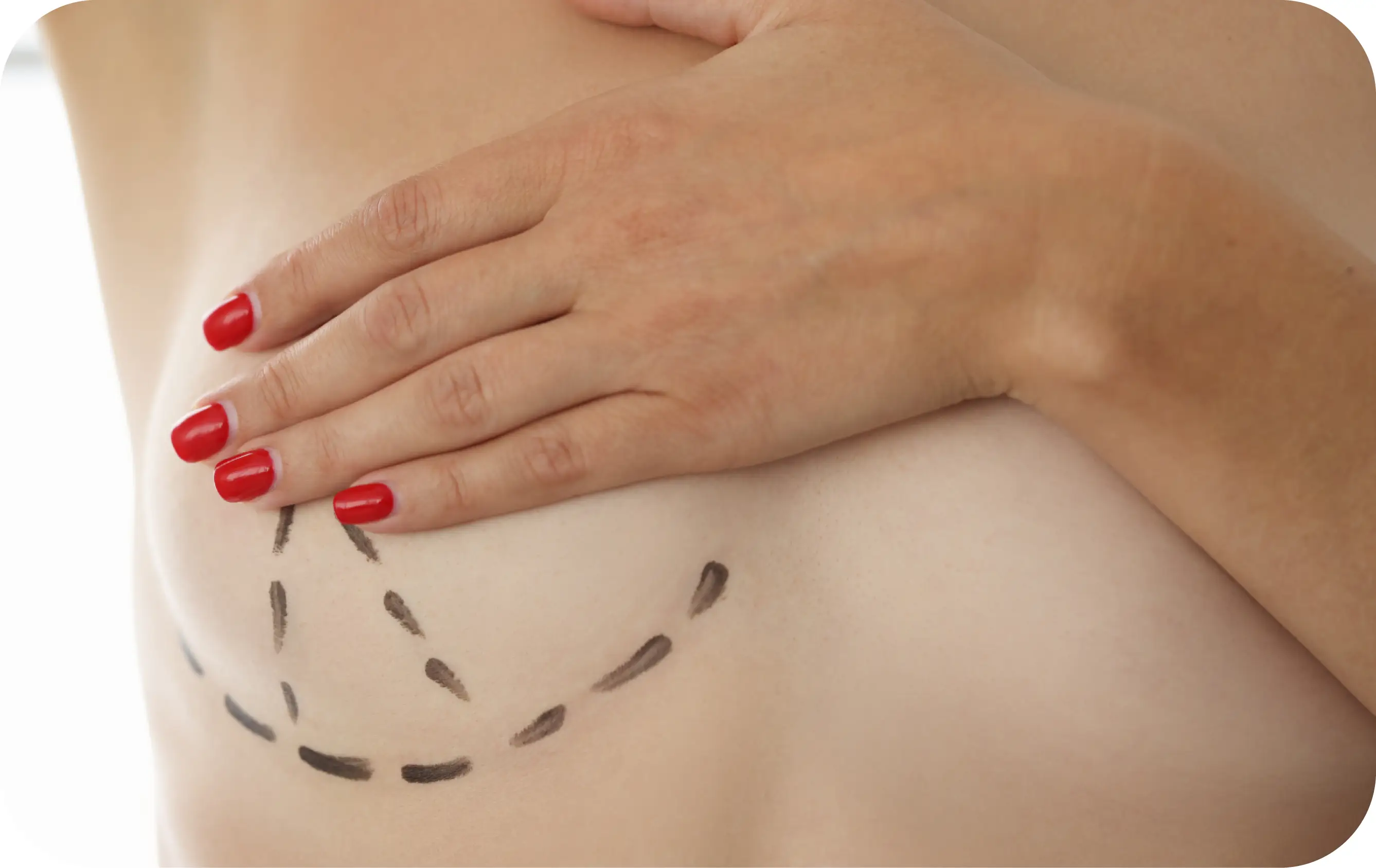
What is a breast uplift?
A breast uplift, known medically as a mastopexy, is an operation to raise and firm breasts that have started to sag. The surgeon removes stretched skin, reshapes the breast tissue and moves the nipple and areola to a higher position. Large or stretched areolas can be made smaller at the same time.
Breasts lose their firmness for many reasons: pregnancy and breastfeeding, weight changes, ageing and genetics all play a part. A lift corrects the shape and position, but it does not add size. If you want more volume as well, the lift can be combined with breast implants, often called an augmentation mastopexy.
Who is a breast uplift suitable for?
You may benefit from a breast uplift if:
- Your breasts have lost their shape and look flatter or longer
- Your nipples sit at or below the crease under the breast when you are not wearing a bra
- Your nipples point downwards or your areolas have stretched
- One breast sits lower than the other
- Your weight is stable and you are in good general health
It is best to wait until you have finished having children, as pregnancy and breastfeeding can change the result. Smokers should stop well before surgery, because nicotine reduces blood flow to the skin and nipple and slows healing.
Breast uplift techniques
Periareolar lift
An incision is made around the edge of the areola only. It suits mild sagging and leaves the smallest scar.
Vertical or lollipop lift
An incision around the areola and a vertical line down to the crease allows the surgeon to reshape the breast more. It suits moderate sagging and is the most common technique.
Anchor lift
A further incision along the breast crease is added. It is used for significant sagging or when a lot of skin needs to be removed.
Lift with implants
If you have lost volume, an implant restores upper fullness while the lift corrects the position. Your surgeon may recommend doing both in one operation or in two stages.
How the operation is done
Consultation and marking
You have blood tests and an ECG the day before surgery. The surgeon examines your breasts, agrees the new nipple position with you and marks the incisions while you stand.
Anaesthesia
The operation is done under general anaesthesia and usually takes 1.5 to 2 hours, or longer if implants are added.
Reshaping
The breast tissue is lifted and shaped into a firmer cone, the nipple is moved up and any excess skin is removed. Implants, if planned, are placed at this stage.
Closing
The incisions are closed with fine stitches, small drains may be placed and you wake up in a supportive surgical bra.
Recovery timeline
- Days 1–3
Your breasts feel sore, tight and swollen. You stay in hospital for 4 nights and drains, if used, are usually removed after a day or two.
- Weeks 1–2
Discomfort eases and most bruising fades. Many women return to desk work towards the end of this stage.
- Weeks 3–6
Light exercise can begin. You keep wearing the support bra and avoid heavy lifting until about week six.
- Months 2–6
Swelling settles completely and the breasts soften into their final shape. Scars continue to fade over the following year.
Aftercare
- Wear the post-operative support bra day and night for around six weeks
- Sleep on your back and avoid lying face down
- Wear loose, front-opening clothes in the first days
- Avoid pressure on the breasts and strenuous activity
- Take prescribed medicines and avoid aspirin and ibuprofen unless approved
- Eat well and do not smoke, as smoking slows healing
Risks and side effects
Your surgeon will discuss the risks with you before surgery. They include:
- Seroma, a collection of fluid
- Bleeding, haematoma and blood clots
- Infection
- Delayed wound healing, especially where incisions meet
- Noticeable or thickened scars
- Changes in nipple or skin sensation, usually temporary
- Uneven size, shape or nipple position
- Possible difficulty breastfeeding in future
- Reactions to the anaesthetic and, rarely, injury to deeper structures
Results
Many women also find that clothes, swimwear and bras fit better and that they feel more comfortable without padding.
Your breasts sit higher straight away, with a fuller, rounder look once swelling settles. The new shape lasts many years, although natural ageing continues. A stable weight and a well-fitting bra help the result last.
Breast uplift in Turkey: your trip
Before you fly
You send photos and your medical history. The surgeon reviews them and you receive a treatment plan. Stop smoking, alcohol and blood-thinning medicines about two weeks before surgery, and stop the contraceptive pill a month before if advised.
In Istanbul
Arrive the day before surgery for tests. Transfers, the hospital stay, a translator, medication and meals are included, and a companion can stay with you at no extra cost.
Back home
Your coordinator is available 24/7 on WhatsApp and passes your photos and questions to the surgeon while you recover.
What the Breast Uplift package includes
- VIP transfers from and to Istanbul Airport (IST)
- Fully equipped room in the hospital
- Translation services at the hospital and during follow-up
- Pre-operative testing
- Consultation with your doctors
- Post-operative care and follow-ups for a year
- General anaesthesia
- Special compression garments
- One companion included in the price
- Three meals a day for you and your companion
- Full hospital stay for 4 nights, 5 days
- Aftercare package with a full set of medications to take home
Breast Uplift FAQ
Will a breast uplift make my breasts bigger?
A lift alone changes the shape and position of your breasts, not their volume. They may even look slightly smaller because they are firmer. If you want more fullness, implants or fat transfer can be added in the same operation.
What will my scars look like?
That depends on the technique. Most patients have a scar around the areola and a vertical one down to the breast crease, and some also have a short scar in the crease. Scars fade over 12 to 18 months but remain visible on close inspection.
Can I breastfeed after a breast uplift?
Many women can, because the nipple usually stays attached to the tissue beneath it. However, there is no guarantee, and ideally you should wait until you have finished having children.
How long does the result last?
The lift is long-lasting, but gravity, ageing, pregnancy and weight changes continue to affect your breasts. Keeping a stable weight and wearing a supportive bra help preserve the shape.
When can I return to work?
Most women go back to desk work after 1 to 2 weeks. Jobs that involve lifting or physical effort need around 4 to 6 weeks.
How long will I stay in Turkey?
Plan for 5 days in Istanbul. Your package includes a full hospital stay of 4 nights, so you recover in a private room with nurses on hand day and night. This covers tests, surgery and a check-up before your flight.
When can I exercise again?
Walking is encouraged straight away. Light exercise can usually resume after 3 to 4 weeks and high-impact activity or upper body training after about 6 weeks.