What is an eyebrow lift?
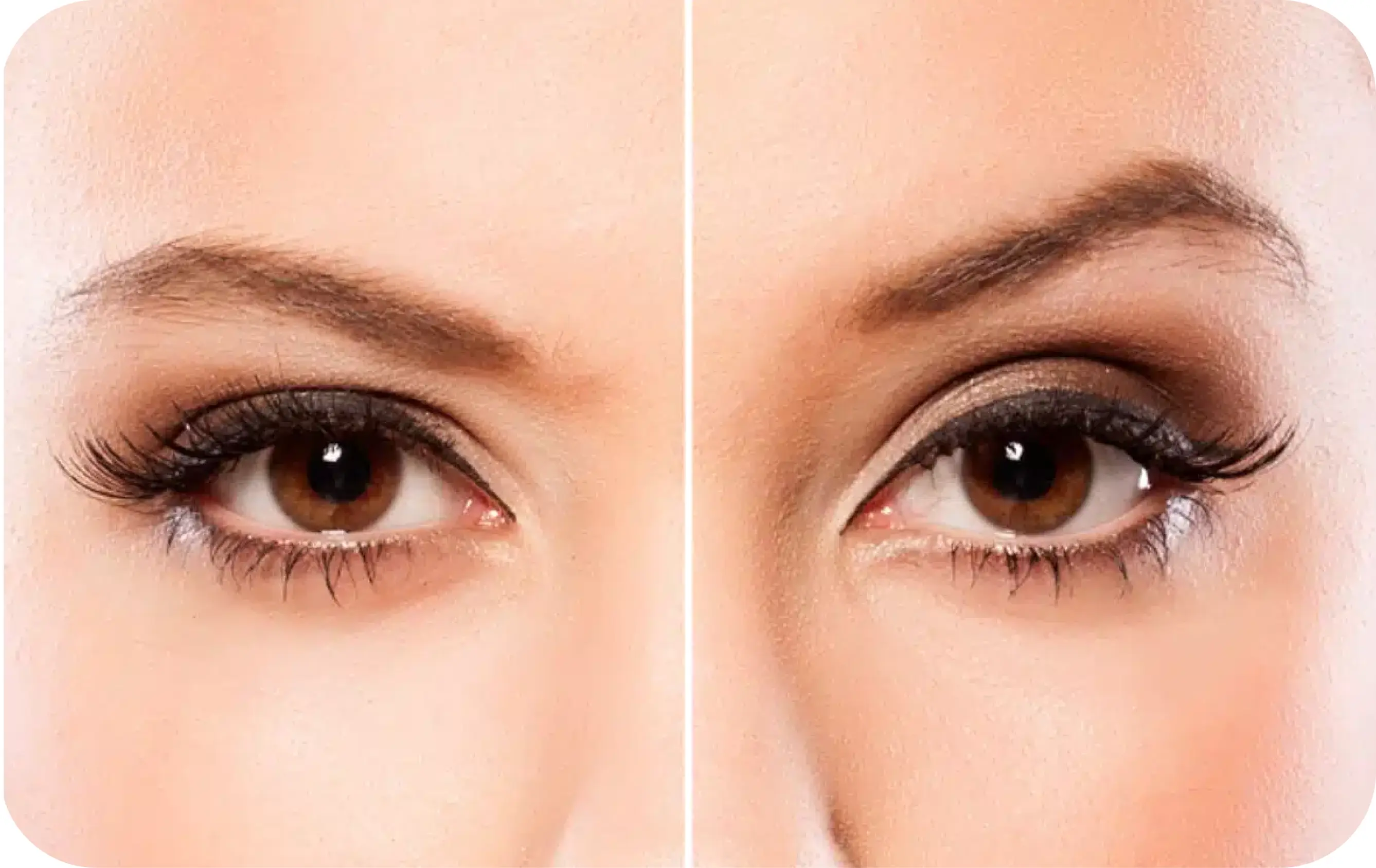
An eyebrow lift, also known as a brow lift or forehead lift, raises the eyebrows and smooths the forehead. With age the skin loses elasticity and the tissues of the forehead slowly descend, pulling the brows downwards. This can make you look tired, sad or annoyed even when you are not, and heavy brows can add to the hooded look of the upper eyelids.
During the operation the surgeon lifts the forehead tissues to a higher position and fixes them there. Muscles that cause frown lines can also be weakened at the same time. The result is a more open, relaxed expression.
Who is an eyebrow lift suitable for?
You may be a good candidate if you:
- Have low or drooping brows, particularly at the outer ends
- Have deep horizontal lines on the forehead or frown lines between the brows
- Have brows at different heights
- Notice that your upper eyelids look heavy because of brow position
- Are in good health and fit for an anaesthetic
Brows often start to drop from the mid-30s, and most patients are over 40. If you have only mild lines, non-surgical options such as muscle-relaxing injections may be enough, and your surgeon will discuss this with you.
Eyebrow lift techniques
Endoscopic brow lift
The surgeon makes three to five short incisions behind the hairline and uses a thin camera to release and lift the tissues. Scars are small and hidden, and recovery is usually quicker. It suits most patients with a normal forehead height.
Coronal brow lift
A longer incision runs across the top of the scalp from ear to ear. It gives the surgeon the most access and suits heavy brows or deep lines, but it raises the hairline slightly and is not ideal for people with a high forehead.
Hairline brow lift
The incision follows the front edge of the hairline. It allows the brows to be raised without making the forehead look taller, and can even shorten a high forehead.
Temporal brow lift
Small incisions in the hair at the temples lift only the outer part of the brows. It is often combined with eyelid surgery.
How the operation is done
Planning
The day before surgery you have blood tests and an ECG. The surgeon studies your face, takes photographs and marks the incision sites and the planned brow position.
Anaesthesia
The operation is usually performed under general anaesthesia and takes about 1 to 2 hours.
Lifting the brow
Through the chosen incisions, the forehead tissues are released, frown muscles are adjusted if needed, and the brow is lifted to its new position.
Fixing and closing
The tissues are secured with stitches or small fixation devices, and the incisions are closed. A light head dressing is applied.
Recovery timeline
- Days 1–3
Your forehead feels tight and swollen, and bruising may spread down to the eyelids. Rest with your head raised and use cold compresses.
- Week 1
Swelling starts to go down. Stitches or clips are removed after about 7 to 10 days.
- Weeks 2–4
Most bruising has gone and you can return to work and social life. Itching and numbness around the incisions are common and gradually ease.
- Months 2–6
Sensation returns, the brows settle and the final result becomes clear.
Aftercare
- Keep your head raised, including when sleeping, for the first week
- Use cold compresses to reduce swelling
- Avoid pressure or rubbing over the incisions
- Wash your hair only when your surgeon allows it
- Avoid facials, massage and skin treatments for at least two weeks
- Avoid strenuous exercise and bending over for around three weeks
Risks and side effects
An eyebrow lift is generally well tolerated, but risks include:
- Visible or widened scars
- Numbness or itching of the scalp, usually temporary
- Uneven brows, which often improve as swelling settles but occasionally need revision
- Hair thinning near the incisions
- Bleeding, infection or reactions to the anaesthetic
- Rarely, weakness of the forehead muscles from nerve injury
Results
Because the eyes and forehead play such a large part in facial expression, many patients find that friends notice they look rested rather than that they have had surgery.
Once swelling has settled, your brows sit higher, the forehead looks smoother and your eyes look more open. The result is long-lasting, and protecting your skin from the sun helps keep it looking its best.
Eyebrow lift in Turkey: your trip
Before you fly
You send photos of your face and your medical history. The surgeon reviews them and you receive a treatment plan. Stop smoking, alcohol and blood-thinning medicines about two weeks before surgery.
In Istanbul
Arrive a day before surgery for tests. VIP transfers, the hospital stay, a translator, medication and meals are included, and a companion can stay with you at no extra cost.
Back home
Your coordinator is available 24/7 on WhatsApp and passes photos and questions to the surgeon as you heal.
What the Eyebrow Lift package includes
- VIP transfers from and to Istanbul Airport (IST)
- Fully equipped room in the hospital
- Translation services at the hospital and during follow-up
- Pre-operative testing
- Consultation with your doctors
- Post-operative care and follow-ups for a year
- General anaesthesia
- Special compression garments
- One companion included in the price
- Three meals a day for you and your companion
- Full hospital stay for 4 nights, 5 days
- Aftercare package with a full set of medications to take home
Eyebrow Lift FAQ
Will I look surprised after a brow lift?
A well-planned lift raises the brows only a little and keeps their natural shape, especially at the inner end. Your surgeon agrees the amount of lift with you before surgery.
Which technique is best for me?
The endoscopic method suits most people with average forehead height. If your hairline is high, a hairline incision avoids raising it further. A coronal lift is used for heavy brows or deep forehead lines. Your surgeon will advise after examining you.
How long does a brow lift last?
Results are long-lasting, usually many years. Your face continues to age, but the brows generally stay higher than they would have without surgery.
Can I have a brow lift with eyelid surgery?
Yes, they are often combined. Lifting the brow first can reduce how much eyelid skin needs to be removed, and doing both together means a single recovery.
Will I lose hair along the incision?
Some thinning near the incisions can happen, but it is usually temporary. Permanent hair loss is uncommon, and surgeons angle incisions to protect hair follicles.
When can I go back to work?
Most people return to work after 7 to 10 days. Bruising can spread to the eyelids, so some patients prefer to wait two weeks before social events.
How long should I stay in Turkey?
Plan for 5 days in Istanbul. Your package includes a full hospital stay of 4 nights, so you recover in a private room with nurses on hand day and night. Stitches or clips can be checked or removed before you fly.