In this article
- 1. Why do so many people choose Turkey for weight loss surgery?
- 2. Is it safe to have weight loss surgery in Turkey?
- 3. How much does weight loss surgery cost in Turkey?
- 4. Am I a candidate for surgery?
- 5. Gastric sleeve or gastric bypass: which is right for me?
- 6. How long will I need to stay in Turkey?
- 7. What does the all-inclusive package cover?
- 8. Can I travel to Turkey alone?
- 9. How much weight can I expect to lose?
- 10. What if I have a problem after I get home?
- Next steps
Travelling abroad for a major operation is a big decision, and it is natural to have a long list of questions before you commit. Istanbul has become one of the most popular destinations for weight loss surgery among patients from the UK, Ireland, North America and Australia, but popularity on its own is not a reason to book.
Below we answer the ten questions our patient coordinators hear most often, whether you are considering a gastric sleeve, a gastric bypass or a gastric balloon. The aim is to give you honest, practical answers so you can decide whether surgery in Turkey is right for you.
1. Why do so many people choose Turkey for weight loss surgery?
Several things come together. Istanbul has a large number of modern private hospitals, and bariatric surgery is performed there in high volumes, so many surgeons have extensive experience with these operations. Treatment is usually offered as a package that brings the hospital stay, tests, transfers and support together, which makes planning far simpler than arranging each part yourself.
Waiting times are another reason. Where public waiting lists for weight loss surgery are long, being able to schedule an operation within weeks of being assessed is a strong draw. Cost matters too, although it should never be the only deciding factor.
2. Is it safe to have weight loss surgery in Turkey?
Weight loss surgery is a major operation wherever it is done, and no provider can remove every risk. What you can control is how carefully you choose. Look for a company with health tourism authorisation from the Turkish Ministry of Health, properly licensed hospitals, surgeons who specialise in bariatric surgery, and a thorough pre-operative assessment rather than a rushed one.
Booking Surgery holds Ministry of Health health tourism authorisation and works with partner hospitals in Istanbul. Operations are performed laparoscopically (keyhole surgery), and every patient has tests and specialist reviews before surgery so the team can confirm it is safe to go ahead. Possible complications include bleeding, infection, a leak from the staple line, blood clots and, after a sleeve, acid reflux. Your surgeon should explain these to you in plain language before you give consent.
3. How much does weight loss surgery cost in Turkey?
Prices in Turkey are generally considerably lower than private treatment in the UK, Ireland, the US or Australia. The difference is mostly down to lower running and staffing costs and exchange rates, not a lower standard of surgery. The exact figure depends on the procedure you need, the hospital, the length of your stay and your own medical needs, so any quote should be personal to you. Be wary of a price that seems far below everyone else's, and always ask exactly what it includes.
4. Am I a candidate for surgery?
International guidelines usually consider weight loss surgery for adults with:
- a BMI of 40 or more, or
- a BMI of 35 or more with a weight-related condition such as type 2 diabetes, high blood pressure or sleep apnoea
Some people with a BMI between 30 and 35 and poorly controlled type 2 diabetes may also be assessed. Most patients are between 18 and 65, although age is considered alongside overall health. Just as important is your readiness to change how you eat for the long term, because surgery works best as part of a lasting change in habits. The final decision always rests with the surgical team after reviewing your medical history.
5. Gastric sleeve or gastric bypass: which is right for me?
Both operations are well established and both can lead to substantial weight loss. The right choice depends on your health rather than preference alone.
Gastric sleeve
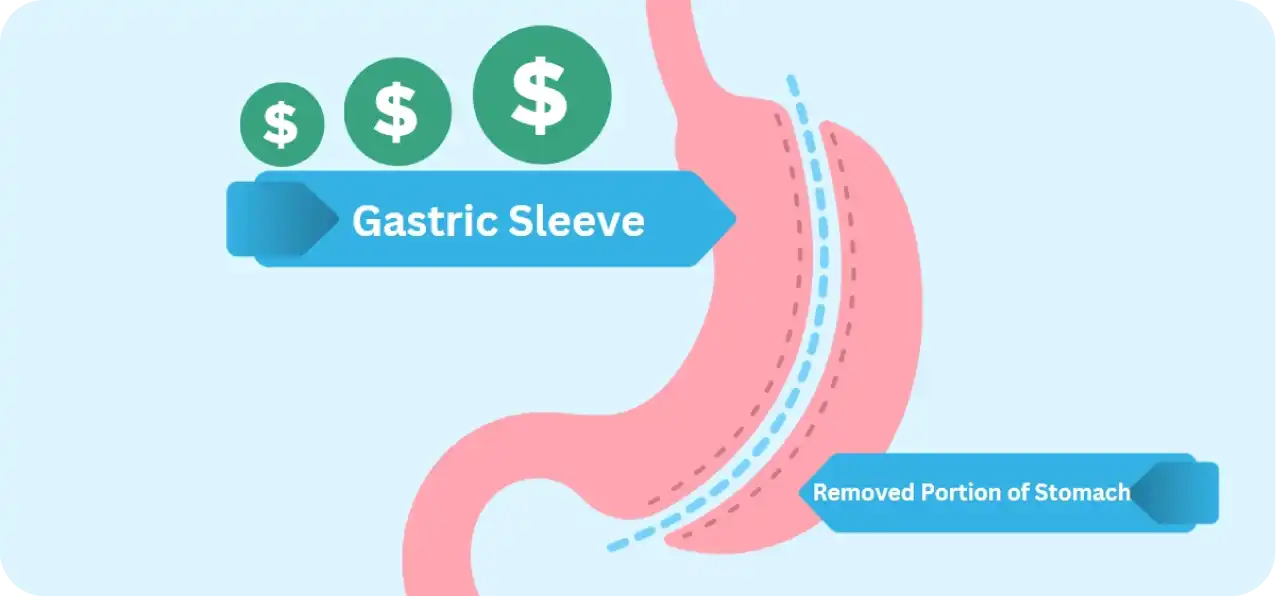
A gastric sleeve removes most of the stomach, leaving a narrow tube. It does not reroute the intestine, so it is technically simpler and carries fewer long-term nutritional concerns than a bypass. It can, however, make acid reflux worse in some people.
Gastric bypass
A Roux-en-Y gastric bypass creates a small stomach pouch connected directly to the small intestine. It is often preferred for people with significant reflux and can be particularly effective for type 2 diabetes. It needs lifelong vitamin and mineral supplements and careful follow-up.
If you would rather avoid surgery, a gastric balloon is a temporary alternative, though results are usually more modest. Your surgeon will recommend an approach after reviewing your BMI, medical history and goals.
6. How long will I need to stay in Turkey?
Plan on 4 days in Istanbul for a gastric sleeve and 5 days for a bypass. A typical stay looks like this:
- Arrival: you are met at the airport and taken to your hotel or the hospital.
- Tests and surgery: pre-operative tests and consultations, followed by the operation once the team is satisfied it is safe.
- Hospital stay: 3 nights for a sleeve or 4 nights for a bypass, for monitoring, pain relief and starting on fluids.
- Recovery: a quieter day at the hotel to rest and walk gently, then a final check before you fly home.
Being reviewed before your flight matters, so avoid booking a return that is too tight.
7. What does the all-inclusive package cover?
A Booking Surgery package is designed so that you know what is arranged before you travel. It includes:
- the surgery and your hospital stay
- pre-operative tests
- medication
- VIP transfers between the airport, hotel and hospital
- a translator
- meals
- a companion at no extra cost
- a 24/7 patient coordinator on WhatsApp
Your written quote will set out exactly what applies to your treatment, so read it carefully and ask about anything that is unclear.
8. Can I travel to Turkey alone?
Yes, many patients travel on their own. Your coordinator is available around the clock on WhatsApp, transfers are arranged for you, and a translator helps with conversations at the hospital. Even so, many people find it reassuring to bring someone, and the package allows a companion at no extra cost. If you do travel alone, share your plans with a friend or relative and keep them updated.
9. How much weight can I expect to lose?
Results vary from person to person. As a general guide, many people lose roughly half to two thirds of their excess weight over the first 12 to 18 months after a sleeve or bypass, with the fastest loss in the early months. How much you lose depends on your starting weight, how closely you follow the diet stages, how active you are and your long-term habits. Your surgeon can give you a realistic estimate for your situation, and it is sensible to be cautious about any promise of a specific number.
10. What if I have a problem after I get home?
Before you leave, you should receive written information about your operation that you can share with your GP or family doctor. It is a good idea to tell your GP about your plans before you travel too, as they will be involved in your long-term care, including blood tests and supplements.
Once home, your coordinator remains available on WhatsApp for questions or concerns and can pass them to the surgical team. For anything urgent, such as severe abdominal pain, a fever, a racing heart, breathlessness or persistent vomiting, contact your local emergency services straight away. In an emergency, local care always comes first.
Next steps
If you are still weighing up your options, the simplest next step is a free assessment with one of our patient coordinators. Share your height, weight and medical history, and the team will tell you whether surgery is likely to be suitable, which procedures might fit and what your personalised package would include. You can also read more on our bariatric surgery page. There is no obligation, and you can take as long as you need to decide.